


The BNAO is becoming a key factor in the fight against corruption
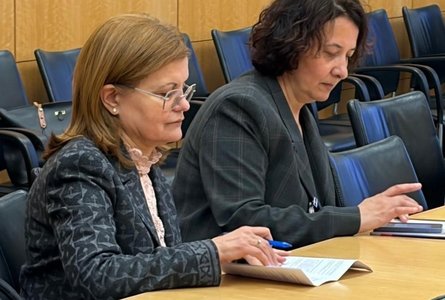
The Vice-President of the Bulgarian National Audit Office (BNAO) Margarita Nikolova participated in the 2026 OECD Global Anti-Corruption & Integrity Forum
The National Audit Office of the Republic of Bulgaria is becoming a key factor in the fight against corruption. The institution's experience in ensuring control over the management of public funds, new responsibilities in measures against abuse of power and the upcoming introduction of artificial intelligence as an assistant in detecting violations and preventing fraud in audit activities were some of the topics of discussion at the meetings held by the Vice-President of the Bulgarian National Audit Office (BNAO) Margarita Nikolova during her participation in the 2026 OECD Global Anti-Corruption & Integrity Forum.*
The event, which took place in Paris from 24 to 27 March, was opened by the OECD Secretary-General, Mr Matthias Cormann. It was attended by leaders from around the world, representatives of the World Bank, the European Commission and the Prosecutor’s Office, the executive branch and supreme audit institutions (SAIs), non-governmental and business organizations, large companies, and others.
The forum provides an annual platform for sharing experiences and ideas on strengthening integrity and improving anti-corruption policies to increase the resilience of democratic societies.
This year, the event is under the theme “The Integrity Advantage: Powering Competitiveness and Prosperity”. Key highlights during the Forum included how effective anti-corruption efforts can directly support economic growth, enhance investor trust and create a sustainable business environment, the role of effective and predictable law enforcement as a foundation for stable markets, the importance of coordinated action between institutions and the use of sanctions, confiscation and compensation as tools to restore economic value, and the partnership between the State and business to improve the investment environment and build a culture of integrity. There was also a focus on how artificial intelligence can help governments prevent fraud.
Margarita Nikolova discussed with participants in the Forum Bulgaria's preparation for joining the OECD, which is one of the top foreign policy priorities of our country. Among the steps being taken in this direction is the strengthening of the effectiveness of anti-corruption measures. The BNAO is becoming one of the main factors for these efforts. In addition to audits of public funds, through which the BNAO guarantees good governance and accountability in the public sector, from February 2026, with a change in the BNAO Act, the BNAO also performs some of the activities of the closed Commission for Counteracting Corruption. Among our institution new responsibilities are: implementing the State policy on corruption prevention; accepting and verifying the declarations of assets and interests of persons holding public positions, as well as maintaining a public register with those declarations; accepting and processing signals from citizens who have data regarding conflict of interest for persons holding public positions.
New responsibilities are ahead for the BNAO in relation to anti-corruption measures, after the National Assembly adopted the Transparency in Interest Representation Act on March 19, 2026. A key part of the Act is the development of a Transparency Register at the BNAO, which will register individuals and organizations engaged in lobbying activities.
The delegation, led by Margarita Nikolova, also included Ms Velislava Valkova, Director of Compliance Audits of Financial Management Directorate.
On March 20, 2026, it became clear that the OECD Working Group on Combating Bribery of Foreign Public Officials in International Business Transactions gave Bulgaria the green light on its path to joining the organization. During the latest plenary session in Paris, the Working Group accepted that our country had satisfactorily implemented all key recommendations related to the accession process in the field of combating corruption. The Working Group gave a high score of the legislative reforms undertaken in Bulgaria, including in the field of criminal regulation of bribery, the regime for engaging corporate liability for crimes, combating false accounting and the protection of persons reporting corruption.
* The OECD is a global policy forum that promotes policies to improve the economic and social well-being of people around the world. When a country is a member of the OECD, it means that the investment climate and business environment are suitable for investment.